- Mob.
+86 138 2778 0549
+86 138 2778 0549
Hospital waiting areas place unique demands on public seating. Patients may wait for appointments, diagnostic tests or consultation for extended periods, while family members and visitors need a comfortable place to sit. At the same time, hospitals require seating that is easy to clean, durable under frequent use and suitable for demanding indoor environments.
Choosing the right hospital waiting chairs therefore involves more than maximizing seating capacity. Surface materials, seat design, structural stability and maintenance requirements all affect the daily performance of a waiting area.
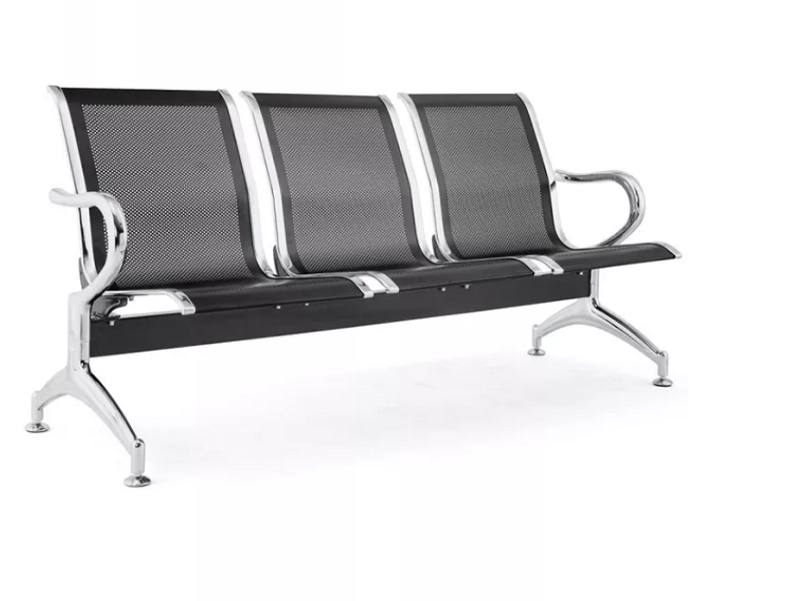
WINNER FURNITURE's stainless steel waiting chairs are designed for public environments where practical maintenance, breathable seating and reliable construction are important considerations. With a perforated seat and backrest design, these chairs offer a functional seating option for hospitals and other high-traffic public facilities.
Hospital waiting rooms are used by people with different ages, physical conditions and comfort requirements. Some visitors remain seated for only a few minutes, while others may wait much longer. Seating must accommodate these varying needs while remaining practical for facility staff to maintain.
Three factors deserve particular attention.
Patients and visitors may experience long waiting times between registration, examinations and consultations. Seating that provides adequate support and allows air to circulate can help make these periods more comfortable.
A perforated seat and backrest allow air to move through the open areas of the chair. Compared with a solid, non-breathable surface, this design can help reduce heat buildup at contact points, particularly in crowded indoor waiting areas.
Hospital seating is exposed to regular cleaning, disinfecting and everyday contact. Surfaces should be compatible with the facility's cleaning procedures and should not require unnecessarily complicated maintenance.
The choice of material and seat construction can affect how easily staff clean the seating and inspect it for visible dirt or damage.
Hospital waiting areas often operate throughout the day, with visitors using the same seating repeatedly. Chairs need suitable structural support, secure connections and durable finishes to withstand regular use.
For procurement teams, these requirements make material selection and construction quality important considerations when comparing hospital waiting chair suppliers.
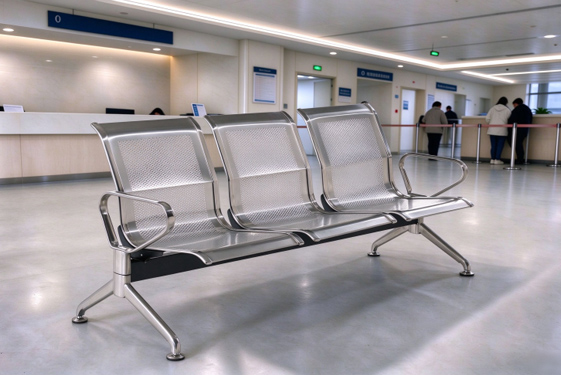
Stainless steel is a practical material option for public seating where a clean appearance, routine maintenance and durable construction are priorities.
Stainless steel surfaces are generally straightforward to wipe down using cleaning products compatible with the material and the facility's procedures. This can help simplify routine maintenance in busy waiting areas.
Unlike upholstered seating, stainless steel does not have fabric cushions or textile seams that can absorb spilled liquids. The actual cleaning performance depends on the chair's construction, surface condition and the cleaning products used.
For healthcare facilities, buyers should confirm that the selected chair materials and finishes are compatible with their approved cleaning and disinfection protocols.
Public seating is subject to repeated use, movement and everyday wear. A properly designed stainless steel waiting chair can provide a durable seating structure for hospitals, clinics and other busy facilities.
However, stainless steel grades and surface finishes vary. Buyers should confirm the material specifications, connection design and expected operating conditions rather than assuming all stainless steel chairs provide identical performance.
The metallic finish of stainless steel seating suits many modern public interiors. Its neutral appearance can complement hospital reception areas, outpatient departments, diagnostic centers and other institutional environments.
For facilities that prioritize practical design over elaborate upholstery, stainless steel waiting chairs offer a straightforward option.
One of the key design features of WINNER FURNITURE's stainless steel waiting chair is its perforated seat and backrest.
The openings serve a practical purpose beyond appearance.
Perforated panels allow air to pass through the seating surface and backrest. This open construction can help reduce the feeling of heat and stuffiness during extended sitting, especially in busy waiting rooms.
For facilities with high visitor turnover, breathable seating can be a useful consideration when comparing different chair designs.
The open structure allows some liquids to pass through rather than remain on a continuous seat surface. This may simplify the removal of spills during cleaning.
The design does not eliminate the need for regular cleaning. Facility staff should still inspect the seat, frame, joints and floor beneath the chair, following the hospital's established hygiene procedures.
Perforated stainless steel seating avoids the fabric upholstery and foam cushions found in many conventional waiting chairs. This can reduce the number of soft-surface components that require separate care or eventual replacement.
When evaluating a perforated chair, buyers should also consider hole geometry, edge finishing and accessibility for cleaning to ensure the complete design meets the facility's maintenance requirements.
Selecting suitable hospital waiting chairs requires a balance between comfort, hygiene, structural performance and long-term maintenance.
Consider whether the seat dimensions and backrest shape suit the intended users and expected waiting times. Facilities serving older adults or visitors with limited mobility may also need to assess seat height, armrest availability and ease of sitting down or standing up.
The chair should have a stable base and secure structural connections. Buyers should review the frame design, connection details and available load-bearing test documentation where relevant.
For multi-seat configurations, it is also important to assess how the connected seating units are supported and installed.
Confirm the stainless steel grade, surface finish and other relevant material details. If the seating will be exposed to specific cleaning chemicals or unusual environmental conditions, verify material compatibility before ordering.
Ask the supplier for appropriate cleaning and maintenance guidance. The chosen cleaning agents should be compatible with the material and finish, and the cleaning procedure should follow the facility's requirements.
The number of seats is only one factor in planning a waiting area. Spacing, circulation routes, access for cleaning and the arrangement of seating rows should also be considered.
For large installations, confirming the seating configuration and dimensions before ordering can help reduce problems during delivery and installation.
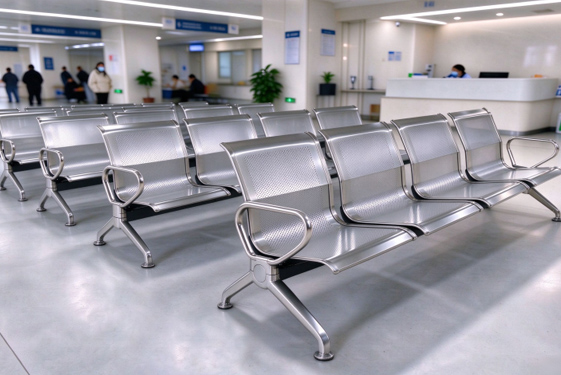
Although hospitals are a key application, stainless steel waiting chairs can also be considered for other public environments that require practical, easy-to-maintain seating.
Hospital waiting chairs can be installed in reception areas, outpatient departments, diagnostic waiting rooms and other patient-facing spaces. The selection should reflect cleaning protocols, user comfort and expected daily traffic.
Airports and transportation facilities need seating that accommodates frequent passenger turnover. Stainless steel waiting chairs can provide a practical option for designated waiting areas where durability and straightforward maintenance are priorities.
Visitors to banks and public service offices may need to wait for appointments or administrative processing. Durable public seating can help organize waiting areas and provide a consistent seating arrangement for visitors.
Schools, colleges and other institutional facilities may use metal waiting chairs in reception areas, corridors and shared public spaces. Buyers should select configurations appropriate to the users, available floor space and expected frequency of use.
Theaters, exhibition venues and other commercial facilities may require waiting or reception seating that complements the interior while remaining easy to maintain. Material, finish and configuration can be selected according to the project's design and operating requirements.
Different public facilities have different requirements. A hospital may prioritize cleaning procedures and visitor comfort, while an airport may focus on passenger capacity, durability and maintenance efficiency.
WINNER FURNITURE provides public seating solutions tailored to the intended environment, with material selection, finishes and structural configurations considered according to project requirements.
When discussing a customized seating project, buyers can provide information about:
Application environment: Hospital, airport, bank, school or another public facility.
Seating configuration: Required number of seats and preferred row arrangement.
Material requirements: Preferred materials and any relevant environmental or maintenance considerations.
Dimensions and layout: Available installation space and circulation requirements.
Finish preferences: Appearance and finish requirements for the facility.
Project quantity and schedule: Estimated order volume, delivery destination and expected timeline.
Providing these details early helps establish the technical and commercial requirements before a quotation is finalized.
For projects requiring specific material grades, load-bearing performance or cleaning compatibility, the relevant requirements should be confirmed with the manufacturer before production.
The right hospital waiting chair should address the practical demands of a healthcare environment while providing a comfortable and maintainable seating solution.
Stainless steel construction, perforated seats and backrests, stable structural design and straightforward surface cleaning are useful considerations when selecting seating for busy public spaces. The final choice should also account for material specifications, installation layout, cleaning procedures and expected usage conditions.
WINNER FURNITURE supplies stainless steel waiting chairs and customized public seating solutions for hospitals, transportation facilities and other institutional environments.
Planning a hospital waiting area or a large public seating project? Contact WINNER FURNITURE to discuss your seating requirements and explore suitable product configurations.
Copyright © Foshan Winner Furniture Co., Ltd. All Rights Reserved |
Sitemap
| Technical Support: