- Mob.
+86 138 2778 0549
Metal frames are widely used in airport waiting chairs, hospital seating and other public seating because of their strength and durability. However, continuous use, humid environments, frequent cleaning and accidental impacts can gradually damage unprotected metal surfaces, increasing the risk of corrosion.
Electrostatic powder coating is a widely used surface finishing process for metal furniture. By creating a protective coating over the metal frame, it helps improve corrosion resistance, surface durability and appearance.
But how exactly does powder coating protect metal waiting chairs? Understanding the coating process and its material properties can help furniture buyers evaluate product quality and long-term maintenance requirements.
One of the main advantages of powder coating is its ability to create a relatively thick and uniform protective film on metal surfaces.
Depending on the coating formulation and application requirements, powder-coated films commonly range from approximately 60 to 120 microns in thickness. This protective layer helps reduce direct contact between the metal substrate and external factors such as moisture and oxygen.
Since moisture and oxygen are essential contributors to many corrosion processes, an intact coating helps slow down rust formation.
For airport waiting chairs and other public seating, this protective barrier is particularly valuable in environments where metal frames are exposed to frequent cleaning and changing humidity conditions.
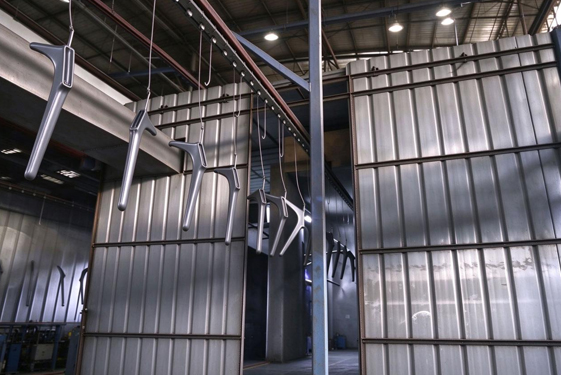
Powder coating commonly uses an electrostatic spraying process to apply coating materials to metal frames.
During spraying, powder particles receive an electrical charge and are attracted to grounded metal components. This electrostatic attraction helps distribute the powder across the frame surface.
Compared with conventional liquid paint application, electrostatic spraying can provide several advantages:
● More consistent coating distribution.
● Better coverage of many edges and corners.
● Reduced paint runs and uneven film accumulation.
● Improved coating consistency across complex metal components.
Welded joints, frame connections and corners require particular attention because coating defects in these areas may expose the underlying metal to moisture.
Proper surface preparation, spray gun positioning and coating thickness control are essential for achieving reliable coverage.
After electrostatic spraying, the coated metal frame enters a curing oven.
Under controlled heating conditions, commonly around 180–220°C depending on the powder formulation, the powder particles melt, flow and undergo chemical curing to form a continuous coating film.
This process helps the coating adhere to the metal substrate and develop its intended mechanical and chemical properties.
A properly cured powder coating provides:
● Strong adhesion to the prepared metal surface.
● Resistance to everyday scratches and abrasion.
● A uniform finish with consistent color.
● Improved protection against environmental exposure.
Insufficient curing may affect coating hardness, adhesion and overall durability. Therefore, temperature control and curing time are important parts of the manufacturing process.
Unlike many conventional liquid coatings, powder coatings are generally formulated without the need for organic solvents.
During the curing process, the powder melts and forms a coating film rather than relying on solvent evaporation to dry.
This offers several manufacturing and environmental advantages:
● Low or negligible VOC emissions from the coating material itself.
● Reduced solvent-related air pollution.
● Less risk of solvent evaporation affecting film formation.
● Potential for powder recovery and reuse, depending on the coating system.
However, powder coatings are not automatically free from every possible coating defect. Poor surface preparation, contamination, unsuitable application conditions or incorrect curing can still cause pinholes, uneven coverage and other defects.
Effective process control remains essential for achieving a consistent protective finish.
The corrosion resistance of powder coating depends largely on its resin chemistry, formulation, film thickness and surface preparation.
Different powder coating types offer different performance characteristics.
Epoxy Powder Coating
Epoxy coatings generally provide good adhesion and chemical resistance, making them suitable for many indoor industrial applications. However, their resistance to prolonged ultraviolet exposure may be limited.
Polyester Powder Coating
Polyester coatings are commonly selected for furniture and other applications exposed to indoor lighting or outdoor environments because of their weathering and UV resistance.
For metal waiting chairs used in airports, hospitals and transportation facilities, polyester powder coatings are often considered when both surface appearance and environmental durability are important.
The actual corrosion resistance should be evaluated through suitable coating tests, such as salt spray testing, according to the required specifications.
Airport waiting chairs are used continuously throughout the day. Their metal frames are exposed to passengers, luggage impacts, cleaning procedures and environmental changes.
A suitable powder coating system helps improve the long-term performance of these seating products.
Airport terminals, railway stations and hospitals may experience varying humidity levels and frequent cleaning.
An intact powder coating helps isolate the metal frame from moisture and other corrosive factors, reducing the likelihood of premature rust formation.
Waiting chairs are subject to repeated contact with passengers, luggage and cleaning equipment.
A properly cured powder-coated surface offers resistance to everyday abrasion and scratches, helping maintain the appearance of metal frames.
Surface damage and corrosion can increase the need for repairs, repainting or component replacement.
Selecting waiting chairs with suitable surface treatment can help reduce maintenance frequency and support longer product service life.
Actual maintenance costs also depend on usage intensity, cleaning methods, environmental conditions and overall product construction.
Large airports and public facilities often require hundreds or thousands of chairs installed in the same area.
Powder coating provides a range of color and finish options, helping manufacturers maintain consistent appearance across large furniture orders.
This is particularly important for projects where seating needs to match the interior design and visual identity of the facility.
For commercial furniture buyers, the appearance of a coated metal frame is not enough to determine its long-term performance.
Before placing a bulk order, consider the following factors:
1. Surface Preparation
Check whether the metal frame undergoes appropriate cleaning and pretreatment before powder coating. Removing oil, rust and surface contaminants helps improve coating adhesion.
2. Coating Thickness
Ask the manufacturer about the specified coating thickness and whether it is measured during production inspection.
3. Curing Process
Confirm that the curing temperature and duration are controlled according to the powder manufacturer's technical requirements.
4. Coating Adhesion
Adhesion testing helps evaluate whether the coating bonds properly to the metal substrate.
5. Corrosion Resistance Testing
Salt spray testing can help assess coating performance under controlled corrosive conditions. Ask for the test standard, duration and actual results rather than relying only on general claims of rust resistance.
6. Welded Joint and Edge Inspection
Pay particular attention to welded areas, corners and connection points, where incomplete coating coverage may increase corrosion risks.
When purchasing airport waiting chairs, hospital seating or other public seating, surface treatment should be considered alongside frame construction, load-bearing requirements, seat materials and overall design.
A suitable powder coating system helps protect metal frames, maintain a professional appearance and reduce the impact of everyday wear.
For large-scale seating projects, buyers should work with manufacturers that can explain their surface preparation procedures, coating specifications and quality inspection methods.
At Winner Furniture, we focus on providing commercial seating solutions for airports, hospitals, transportation facilities and other public spaces. By considering product construction, surface finishing and project requirements together, we help customers select suitable seating products for different commercial environments.
Powder coating provides a protective finish for metal frames, helping improve corrosion resistance, scratch resistance and surface durability. It is widely used for commercial furniture exposed to frequent use.
A typical powder coating film thickness may range from 60 to 120 microns. The actual thickness depends on the coating formulation, metal substrate and product requirements.
Powder coating can provide advantages in film thickness, surface durability and application efficiency. However, the actual performance of either coating system depends on material formulation, surface preparation, application quality and curing conditions.
No coating can guarantee permanent rust prevention under all conditions. Powder coating helps protect the metal substrate by reducing exposure to moisture and corrosive substances. Its effectiveness depends on coating integrity, adhesion, thickness and maintenance.
Epoxy powder coatings generally offer good adhesion and chemical resistance, while polyester powder coatings are commonly selected for better weathering and UV resistance. The appropriate option depends on the intended indoor or outdoor application.
Buyers can request information about surface pretreatment, coating thickness, curing conditions, adhesion testing and salt spray test results. These checks provide a more reliable basis for evaluating coating quality than appearance alone.
Powder coating plays an important role in protecting metal frames used in airport waiting chairs, hospital seating and other public furniture.
Through electrostatic application and controlled high-temperature curing, it creates a protective film that helps resist corrosion, scratches and everyday wear.
For commercial furniture procurement, choosing the right coating system is not simply about color or appearance. It is about ensuring that the seating can maintain its performance and appearance throughout years of regular use.
Looking for durable airport waiting chairs or customized public seating solutions? Contact Winner Furniture to discuss your project requirements and product specifications.
Copyright © Foshan Winner Furniture Co., Ltd. All Rights Reserved |
Sitemap
| Technical Support: