- Mob.
+86 138 2778 0549
+86 138 2778 0549
When the lights dim and an audience settles into an auditorium, few people think about the engineering behind their seats. Yet every auditorium chair must withstand repeated use, frequent seat movement and the demands of a busy public venue. Over years of operation, a chair may be flipped up and down tens of thousands of times, making structural strength, material selection and mechanism reliability essential to its long-term performance.
For theaters, conference halls, universities and performance venues, choosing an auditorium chair is not simply a matter of appearance or initial purchase price. The quality of the steel frame, surface finish, upholstery, foam and moving components all influence durability, maintenance requirements and the overall cost of ownership.
So, what makes an auditorium chair last? The answer lies in a series of manufacturing decisions made long before the first audience member takes a seat.
The frame forms the structural foundation of an auditorium chair. Its material specifications, component geometry and connection quality determine how well the chair supports users during everyday operation.
Auditorium chair frames commonly use cold-rolled steel sheet or steel tubes, depending on the component and structural design. These materials can be processed into the shapes required for seat supports, backrest structures, legs and connecting components.
The appropriate material thickness and cross-section should be selected according to the chair's design, expected loading conditions and intended application. Simply using more steel does not automatically produce a better chair; structural efficiency also depends on how the components are designed and assembled.
Metal components are formed through stamping or other suitable fabrication processes before being assembled into the frame. Welding connects the individual parts, while reinforcement at load-bearing points helps distribute forces through the structure.
Areas around seat supports, armrests and frame connections deserve particular attention because repeated loading can place stress on these components. Consistent welding quality and accurate assembly help maintain structural stability during everyday use.
For project buyers, evaluating the frame should involve more than looking at the finished chair. Material specifications, welding workmanship, connection design and relevant load-bearing test results provide a more useful basis for comparing auditorium chair manufacturers.
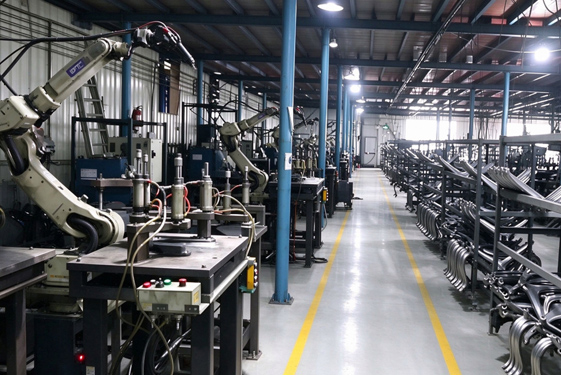
Once metal components have been fabricated, surface finishing helps protect the frame and establish the chair's final appearance.
Electrostatic powder coating is a common finishing method for metal auditorium chairs. After appropriate surface preparation, coating powder is applied to the metal and cured according to the coating system's requirements.
A properly applied powder coating helps protect the underlying metal against corrosion and everyday surface wear. Auditorium chairs are frequently exposed to contact with clothing, bags, cleaning tools and other objects, so the finish must suit the expected operating environment.
Coating performance depends on several factors, including surface preparation, coating formulation, film thickness and curing conditions. Inadequate preparation or uneven coverage may reduce the protective performance of the finish.
In theaters, lecture halls and conference venues, hundreds of chairs may be installed in the same space. Consistent color and surface quality therefore contribute to the overall appearance of the venue.
A suitable coating system can help maintain a uniform finish and simplify routine maintenance. Buyers should examine visible surfaces, edges and welded areas when evaluating finished products.
For projects with specific cleaning or corrosion-resistance requirements, the manufacturer should confirm the coating specifications and its compatibility with the intended maintenance procedures.
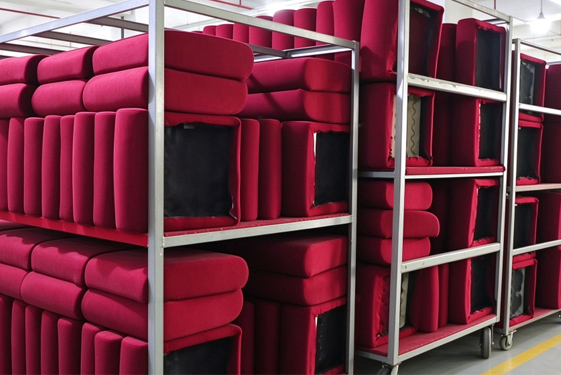
The seat and backrest directly affect the user's experience. Their performance depends on the interaction between the upholstery material, cushioning foam and internal support structure.
Auditorium chairs may use durable fabric or leather-like upholstery, depending on the project requirements. The selected material should suit the venue's appearance, expected frequency of use and cleaning procedures.
Fabric resistance to abrasion, pilling and seam damage is particularly important in high-traffic environments. Buyers should also consider color consistency and the availability of suitable replacement upholstery if maintenance or refurbishment becomes necessary.
High-resilience foam provides cushioning for the seat and backrest. Its density, thickness and resilience influence comfort and its ability to retain shape under repeated use.
Foam that is poorly matched to the application may lose its support or become permanently compressed over time. For venues that host frequent performances, lectures or conferences, cushioning performance should be considered alongside frame strength and upholstery durability.
Fire performance is an important consideration when specifying auditorium seating, particularly in enclosed public venues. Upholstery fabrics and cushioning materials may need to meet applicable fire-safety requirements depending on local regulations, building codes and project specifications.
Buyers should confirm the required standards and request relevant test documentation before ordering. Fire-retardant material selection should be verified for the actual product configuration rather than assumed from a general description.
A well-designed auditorium chair must balance comfort, durability and the safety requirements applicable to its installation environment.
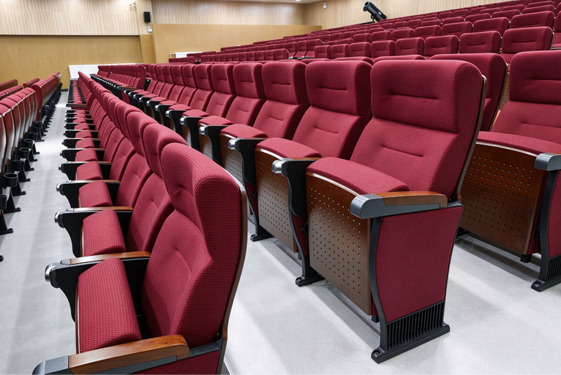
One of the main differences between auditorium chairs and ordinary fixed seating is the moving seat mechanism. Depending on the design, the seat may return upward under gravity or use a controlled slow-return mechanism.
Although these components may be less visible than the upholstery or frame, their reliability has a direct effect on the chair's everyday operation.
Gravity self-return mechanisms allow the seat to move back toward its upright position when the user stands up. Slow-descent designs control the return movement to reduce sudden impact and noise.
The appropriate mechanism depends on the chair design, user expectations and operating environment. Smooth movement, consistent return behavior and secure mounting are important characteristics to evaluate.
Repeated seat movement places ongoing demands on the mechanism and its connection points. A chair may operate smoothly when new but develop looseness, noise or inconsistent movement if its components are poorly designed or manufactured.
The original article highlights 100,000 tip-up cycles as a durability benchmark. For procurement purposes, buyers should confirm whether this figure is supported by a documented test, which components were tested and what acceptance criteria were applied.
Cycle testing can help assess whether a mechanism continues to operate as intended under repeated movement. However, the result should not automatically be interpreted as a guaranteed service life of ten years or more, since actual performance also depends on usage frequency, maintenance and operating conditions.
Depending on the model, auditorium chairs may incorporate armrests, writing tablets and numbered seats. These components also affect the product's usability and maintenance requirements.
Writing tablets need suitable support and reliable movement where folding designs are used. Armrests should be securely attached, while seat numbering should remain legible throughout routine use.
For large installations, buyers should review the complete configuration rather than assessing the seat mechanism in isolation.
A reliable manufacturing process requires checks at different production stages. Final appearance alone cannot confirm the quality of the internal structure or moving components.
When evaluating an auditorium chair manufacturer, buyers should consider the following inspection areas:
Frame fabrication: Review component dimensions, welding quality, structural connections and visible defects.
Surface finishing: Check coating coverage, color consistency, scratches and the condition of edges and joints.
Upholstery and foam: Examine stitching, fabric tension, cushioning consistency and overall assembly.
Mechanical operation: Check seat return movement, noise, alignment and the stability of connected components.
Structural performance: Request applicable load-bearing or stability test results when required by the project.
Fire performance: Confirm the relevant material specifications and documentation required by local codes or project standards.
For projects requiring specific durability benchmarks, buyers should agree on the test methods, acceptance criteria and documentation before production begins.
A clearly defined inspection process makes it easier to compare suppliers and helps identify issues before products are installed in the venue.
The initial purchase price is only one part of the cost of auditorium seating. Maintenance, repairs, replacement parts and eventual refurbishment also influence the total cost over the chair's service life.
A weak frame connection may require repair. An unsuitable coating may deteriorate prematurely. Low-quality upholstery may show wear earlier than expected, while an unreliable tip-up mechanism may require repeated adjustment or replacement.
These issues can become more significant when a venue contains hundreds or thousands of seats.
For procurement teams, a more complete evaluation should consider:
Material specifications and manufacturing consistency
Availability of relevant product test reports
Durability of upholstery and surface finishes
Reliability and maintainability of moving mechanisms
Availability of replacement components
Cleaning requirements and expected maintenance frequency
Supplier support and project-specific requirements
A chair with a higher initial price may offer better long-term value if its construction and maintenance requirements are better suited to the venue. The decision should be based on verifiable specifications and the intended operating conditions.
Selecting an auditorium chair manufacturer requires a clear understanding of the project's technical and operational needs.
The buyer should first establish the intended venue, seating capacity, preferred design, upholstery requirements and any applicable fire-safety standards. These details help determine the appropriate frame construction, seat mechanism and finishing system.
The next step is to review the manufacturer's production capabilities and quality-control procedures. Product samples, technical drawings, material specifications and test reports can help procurement teams assess whether the proposed chair meets their requirements.
For larger projects, it is also important to confirm seating layouts, installation conditions, delivery schedules and the availability of after-sales support.
WINNER FURNITURE provides auditorium seating solutions for theaters, lecture halls, conference centers and other public venues. Our team can discuss product configurations and project requirements to help buyers identify suitable seating options.
A durable auditorium chair is the result of coordinated engineering and manufacturing decisions. Steel selection and frame reinforcement provide structural support; powder coating protects the metal surface; suitable upholstery and foam contribute to comfort; and reliable tip-up mechanisms support repeated daily operation.
For procurement teams, the best way to evaluate durability is to look beyond appearance and price. Material specifications, manufacturing quality, documented testing and long-term maintenance requirements all deserve attention before an order is placed.
Planning an auditorium, theater or lecture hall seating project? Contact WINNER FURNITURE to discuss your seating requirements, product configurations and project specifications.
Copyright © Foshan Winner Furniture Co., Ltd. All Rights Reserved |
Sitemap
| Technical Support: