- Mob.
+86 138 2778 0549
+86 138 2778 0549
Comfortable theater seating can directly influence how audiences evaluate a cinema, auditorium, performing arts center or private screening room. Even when the sound and visual systems are excellent, uncomfortable seats can make a two-hour performance feel much longer.
For theater owners, contractors and seating distributors, improving comfort is not simply about adding thicker cushions. Seat dimensions, ergonomic support, row spacing, upholstery, reclining functions and installation layout all affect the final user experience.
This guide explains how to make theater seats more comfortable while balancing seating capacity, maintenance requirements, project budgets and long-term durability.
Theater visitors often remain seated for two or more hours. During that time, poor back support, insufficient legroom or hard seat cushions may cause discomfort and frequent movement.
For commercial venues, comfortable seating can help:
Improve the overall audience experience
Support premium ticket pricing
Encourage repeat visits
Reduce customer complaints
Strengthen the image of the venue
Differentiate VIP halls from standard halls
Increase customer satisfaction during long performances
However, comfort must be considered together with safety, space utilization, cleaning and maintenance. An oversized theater recliner may feel luxurious, but it may also significantly reduce the number of seats that can be installed in the room.
The best solution depends on the theater type, target audience and expected ticket value.
Seat width is one of the first factors affecting comfort.
Commercial theater seats generally need to provide enough space for the user without making the row unnecessarily wide. Wider seats are commonly selected for VIP cinemas, private theaters and premium auditoriums, while compact folding seats are more suitable for high-capacity venues.
When selecting seat dimensions, consider:
Seat width
Seat depth
Backrest height
Armrest width
Distance between seat centers
Available row spacing
Audience demographics
A seat that is too narrow can feel restrictive. A seat that is too deep may provide poor lower-back support for shorter users.
Before ordering, theater buyers should provide the manufacturer with a floor plan and required seating capacity. This allows the supplier to recommend a suitable balance between comfort and space efficiency.
A theater chair should support the natural shape of the human back.
Flat backrests may be acceptable for short waiting periods, but they are less suitable for movies, performances and conferences that last several hours. A properly shaped backrest can support the lumbar area and reduce pressure on the lower back.
Comfortable theater seat backs may include:
Curved ergonomic profiles
Molded foam support
Integrated lumbar shaping
Padded head support
Adjustable reclining angles
High-back designs
The angle between the seat and backrest is also important. If the backrest is too upright, the chair may feel formal and tiring. If it leans too far back, it may affect the user's viewing angle or require additional row space.
For this reason, backrest geometry should be selected according to the intended application.
Thicker foam does not always mean better comfort.
Low-density foam may feel soft when new but can quickly lose its shape under frequent commercial use. Once compressed, the seat may become uneven and uncomfortable.
For commercial theater seating, high-density molded foam is generally preferred because it can provide:
Better pressure distribution
Consistent seat shape
Improved durability
Reduced long-term deformation
Stable support during extended use
The seat cushion and back cushion may require different foam densities. The seat usually needs stronger support, while the backrest may use a slightly softer structure.
B2B buyers should ask the theater seat manufacturer about foam density, molding methods and durability testing rather than evaluating comfort only from cushion thickness.
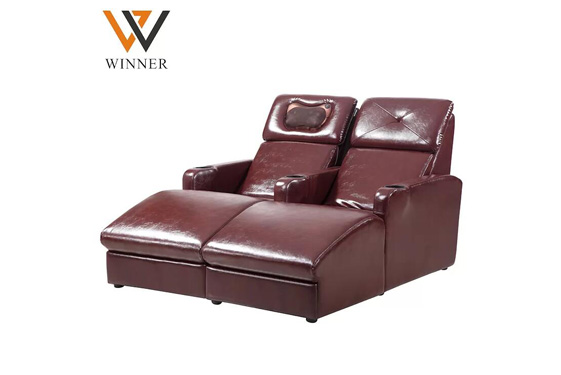
Even a well-designed chair can feel uncomfortable when the rows are installed too close together.
Row spacing affects:
Legroom
Passenger movement
Access to seats
Cleaning efficiency
Emergency evacuation
Reclining space
Overall seating capacity
Fixed folding theater chairs can help maximize aisle space because the seat automatically returns to an upright position when not occupied.
Reclining cinema seats require more space, especially when equipped with extended footrests. Electric recliners should be tested in both upright and fully reclined positions during the layout planning stage.
The correct row spacing should consider local building regulations, aisle requirements and the dimensions of the selected chair model.
Armrests affect both comfort and personal space.
Narrow shared armrests may increase seating capacity, but individual padded armrests can offer a more premium experience. For VIP theaters, wider armrests can also accommodate cup holders, tray tables, storage compartments and control buttons.
Available armrest options may include:
Shared armrests
Individual armrests
PU-padded armrests
Wooden armrest caps
Integrated cup holders
Foldable tray tables
USB charging ports
Recliner control panels
The armrest height should allow users to relax their shoulders naturally. Armrests that are too high or too low may create discomfort during long viewing periods.
Upholstery affects comfort, appearance, cleaning and maintenance.
Fabric offers a soft, warm surface and can provide good breathability. It is widely used in cinemas, auditoriums and performing arts venues.
Commercial-grade fabrics should be selected according to:
Abrasion resistance
Color fastness
Fire-resistance requirements
Stain resistance
Cleaning methods
Acoustic performance
PU leather provides a smooth appearance and is easier to wipe clean than many fabrics. It is commonly used for VIP cinema recliners and private theater seating.
The quality of PU leather varies significantly. Buyers should evaluate thickness, surface durability and resistance to peeling or cracking.
Genuine leather may be used in luxury screening rooms or premium private theaters. It offers a high-end appearance but generally requires a higher budget and more careful maintenance.
The most suitable upholstery depends on the theater positioning, usage frequency and cleaning requirements.
Reclining seats can significantly improve comfort, especially in VIP cinemas and premium screening rooms.
Common configurations include:
Fixed backrests
Rocking backrests
Manual recliners
Electric recliners
Independent backrest and footrest controls
Zero-wall or space-saving recliners
Electric cinema recliners allow users to adjust the chair with a button. Some models can independently control the backrest and footrest, while others use a synchronized reclining mechanism.
Before selecting electric seating, buyers should consider:
Power supply arrangements
Cable routing
Motor quality
Control button position
Maintenance access
Replacement part availability
Emergency reset options
Electric functions improve comfort, but they also increase installation and maintenance requirements. Theater operators should ensure that the manufacturer can provide technical support and spare components.
Theater comfort is also affected by heat buildup.
Thick, non-breathable upholstery may feel uncomfortable in warm environments or during long performances. Breathable fabric, perforated upholstery and properly designed foam channels can improve air circulation.
The venue's HVAC system also plays an important role. Seats should not block air outlets or create uneven airflow between rows.
In regions with hot climates, upholstery selection should consider:
Surface temperature
Breathability
Humidity resistance
Odor resistance
Cleaning frequency
Theater seating should operate quietly.
Loud folding mechanisms, squeaking frames and noisy recliner motors can disturb the audience. This is particularly important in cinemas, theaters, lecture halls and conference venues.
To reduce operational noise, buyers should evaluate:
Gravity-return mechanisms
Springs and dampers
Frame connections
Moving joints
Recliner motors
Seat-bottom impact
Floor fixing stability
A well-designed folding mechanism should return the seat smoothly without producing a sudden impact sound.
Regular inspection and lubrication can also prevent noise from developing after extended use.
Comfort is not limited to the seat cushion.
Accessories can improve convenience and create additional value for customers. Common theater seating accessories include:
Cup holders
USB and Type-C charging ports
Power outlets
Foldable writing tablets
Swivel tray tables
Coat hooks
Seat numbering
Row lights
Storage compartments
Mobile phone holders
Not every venue needs every accessory. The configuration should match the intended use.
For example, cup holders are essential for commercial cinemas, while writing tablets may be more useful in lecture theaters and conference halls.
A comfortable theater should serve a wide range of visitors.
The seating layout may need to accommodate:
Children
Elderly visitors
Tall users
People with reduced mobility
Wheelchair users
Bariatric users
VIP customers
Removable seats, wider chairs and wheelchair companion seating can help create a more inclusive layout.
Seats near accessible areas should provide sufficient transfer space and should comply with applicable accessibility regulations.
For family cinemas, booster seats may also be provided for younger viewers.
Comfort is subjective, so samples are valuable for large seating projects.
Before confirming a large order, buyers may request:
Product samples
Upholstery swatches
Foam samples
Frame finish samples
Recliner mechanism videos
Seat dimension drawings
Full-size mock-up rows
A sample allows the project team to evaluate seat width, back support, foam firmness, armrest height and overall appearance.
For customized theater seating, final specifications should be approved before mass production begins.
One of the main challenges in theater design is finding the right balance between comfort and revenue-generating capacity.
| Theater Type | Recommended Seating Direction |
|---|---|
| Standard commercial cinema | Compact fixed folding chairs |
| VIP cinema | Wide electric recliners |
| Multipurpose auditorium | Ergonomic folding auditorium chairs |
| Private theater | Recliners or cinema sofas |
| Lecture theater | Fixed seats with writing tablets |
| Performing arts venue | High-back fabric auditorium seating |
Increasing seat width and row spacing improves comfort but reduces total capacity. Buyers should calculate the effect on ticket revenue, audience positioning and room utilization before selecting a model.
In some projects, a mixed seating strategy works well. Standard seats can be installed in most rows, while premium recliners are placed in designated VIP areas.
Before placing an order, B2B buyers should ask:
What seat dimensions are available?
Can the backrest and foam firmness be customized?
What is the foam density?
What upholstery options are available?
Does the fabric meet the required fire standard?
What is the recommended row spacing?
Are replacement parts available?
Can the seat be installed on sloped or stepped floors?
What accessories can be added?
Can the manufacturer review the theater floor plan?
Are samples available?
What quality inspections are completed before shipment?
These questions can help buyers compare suppliers based on engineering capability and long-term value rather than unit price alone.
Making theater seats more comfortable requires a complete approach. Seat width, ergonomic support, foam quality, upholstery, row spacing, armrests, reclining functions and accessories must work together.
For theater owners and project contractors, the best seating solution should provide comfort without compromising capacity, safety, durability or maintenance efficiency.
Winner provides fixed theater chairs, auditorium seating, VIP cinema recliners and customized seating solutions for commercial entertainment and public venue projects. Buyers can provide a floor plan, required seating quantity, preferred upholstery and functional requirements to receive a suitable seating recommendation.
Request a Theater Seating Layout
Send your room dimensions, floor plan and required seating capacity to receive a customized theater seat recommendation and project quotation.
Copyright © Foshan Winner Furniture Co., Ltd. All Rights Reserved |
Sitemap
| Technical Support: